Opera libretto by Carlo Goldoni (113 pages)
Contact : goldoni@saggiori.com
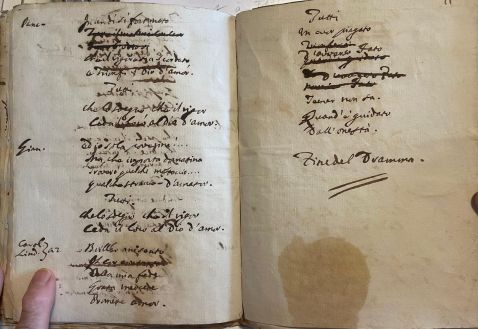
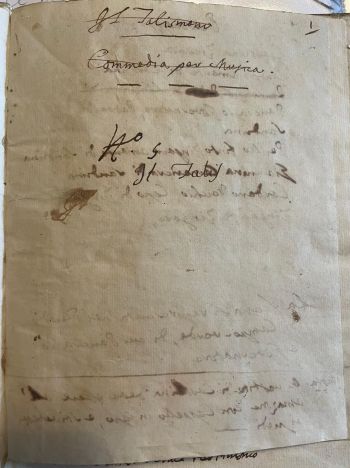
Il talismano (The Talisman) is a dramma giocoso per musica (comic opera libretto) written by Carlo Goldoni in 1779, one of his final works. The libretto was set to music by Antonio Salieri (for the first act) and Giacomo Rust (for the subsequent acts), with revisions by Lorenzo Da Ponte. It premiered on August 21, 1779, at the Teatro alla Canobbiana in Milan, to inaugurate the theater.
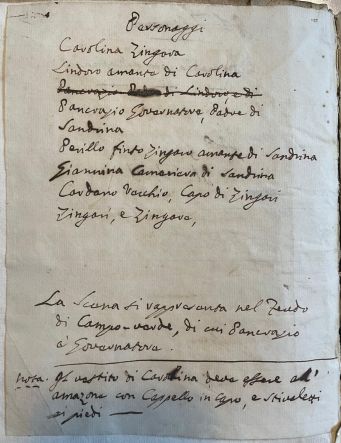
The story revolves around romantic misunderstandings and a magical object. The governor Pancrazio wants to marry his daughter Sandrina to Lindoro. However, Lindoro is in love with the gypsy Carolina and has no intention of marrying Sandrina.
Meanwhile, Perillo, who is in love with Sandrina, has fled and joined the gypsies because Pancrazio disapproves of their relationship.
To allow the four young lovers to unite according to their own wishes, Carolina uses a talisman given to her by the gypsy chief Cardano. This talisman enables her to change her appearance and identity at will, leading to a series of deceptions, disguises, and tricks aimed at outwitting Pancrazio.
The work is a light-hearted comedy filled with wordplay and misunderstandings, typical of the 18th-century opera buffa genre, incorporating elements of magic and gentle social satire.
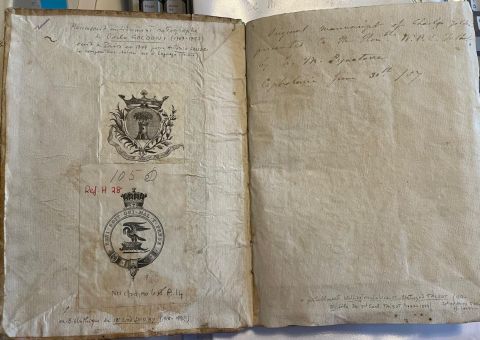
Il Talismano is a significant work in Carlo Goldoni's career primarily because it represents one of his last contributions to musical theater, marking the end of a long and prolific output of opera buffa librettos. Written in 1779 when Goldoni was 72 years old and living in exile in Paris, it exemplifies his enduring creativity despite declining health, financial difficulties, and cultural adaptation challenges.
Goldoni revolutionized 18th-century Italian theater by reforming the commedia dell'arte, replacing masks and improvisation with realistic characters, structured plots, and bourgeois themes inspired by Molière. After a triumphant period in Venice (1748-1762), where he collaborated with composers like Baldassare Galuppi on over twenty opera buffa librettos, he left Italy in 1762 amid rivalries with Carlo Gozzi and Pietro Chiari.
In Paris, Goldoni adapted to French tastes, writing comedies in French and his famous Memoirs (1787), while continuing to supply librettos for Italian theaters. Il Talismano-adapted from an earlier comedy of his own-features typical Goldonian elements: romantic mix-ups, a magical talisman enabling identity changes, and light social satire. It is his final known libretto, blending humor, fantasy, and bourgeois realism.
The work highlights Goldoni's pioneering role in democratizing opera buffa and his influence on later composers (including indirect links to Mozart via Da Ponte). Though less famous than his spoken comedies like The Mistress of the Inn (1753), it underscores his versatility and lasting impact on European musical and dramatic theater.